
Swarthmore College – To Zero By Thirty-Five (20X35)
Swarthmore College – To Zero By Thirty-Five (20X35)
Location: Swarthmore, Pennsylvania
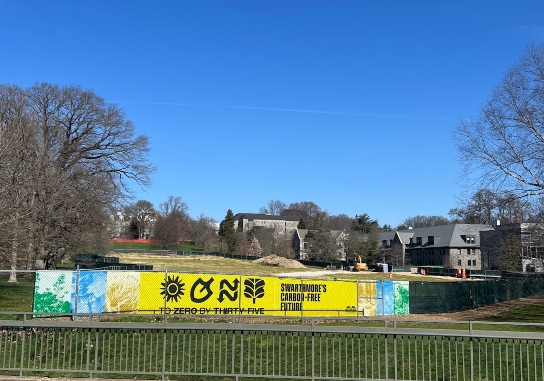
Aegis is providing program management services on Swarthmore College’s To Zero By Thirty-Five (20X35), the College’s ambitious efforts to reach full carbon neutrality by 2035. Retained for this project in October 2021, this assignment is ongoing, on a highly active campus, consisting of multiple projects and phases, touching nearly the entire campus and its infrastructure over its duration.
For more information, see the College’s information on this effort..
Related:
In July 2025, Aegis President & Partner John Cacciola joined our client Andrew Feick, Associate Vice President for Sustainable Facilities Operations and Capital Planning at Swarthmore College; Nicole Ostrander, Senior Associate at Ayers Saint Gross; and John Sutton, Associate atIntroba, to present at the Society for College and University Planning’s Annual Conference in Honolulu, Hawai’i in a session about Integrated Campus Planning at Swarthmore College titled Integrated Planning for Sustainability: Does Process Really Matter for Success?
As institutions grapple with decarbonization commitments alongside facility and fiscal pressures, integrated planning is crucial for good decision-making and advancing the institution’s mission and needs simultaneously. This case study from Swarthmore College highlights concurrent planning and implementation for its energy plan with decarbonization, campus renewal plan to address deferred maintenance, strategic plan, space utilization study, and campus master plan. Join us to gain a concrete approach to evaluating sustainability planning strategies and implementation timelines while building institutional culture and trust on your campus.
Learning Outcomes:
– Formulate an integrated planning sequence and identify tradeoffs of different approaches to building a more sustainable and healthy environment.
– Analyze how planning decisions support or detract from your campus’s decarbonization goal towards climate safety.
– Compare fixed versus adaptive planning processes and examine the benefits and necessity of flexibility, particularly in implementation.
– Ensure a positive planning culture and apply engagement and communication strategies to promote community buy-in, resulting in a healthy, sustainable campus.